“Ave Regina Caelorum”. New release.
Motet
Bernardo Latini
SATB Choir
(Organ ad libitum)
First Prize III Concurso de composición coral «José Mardones» 2025
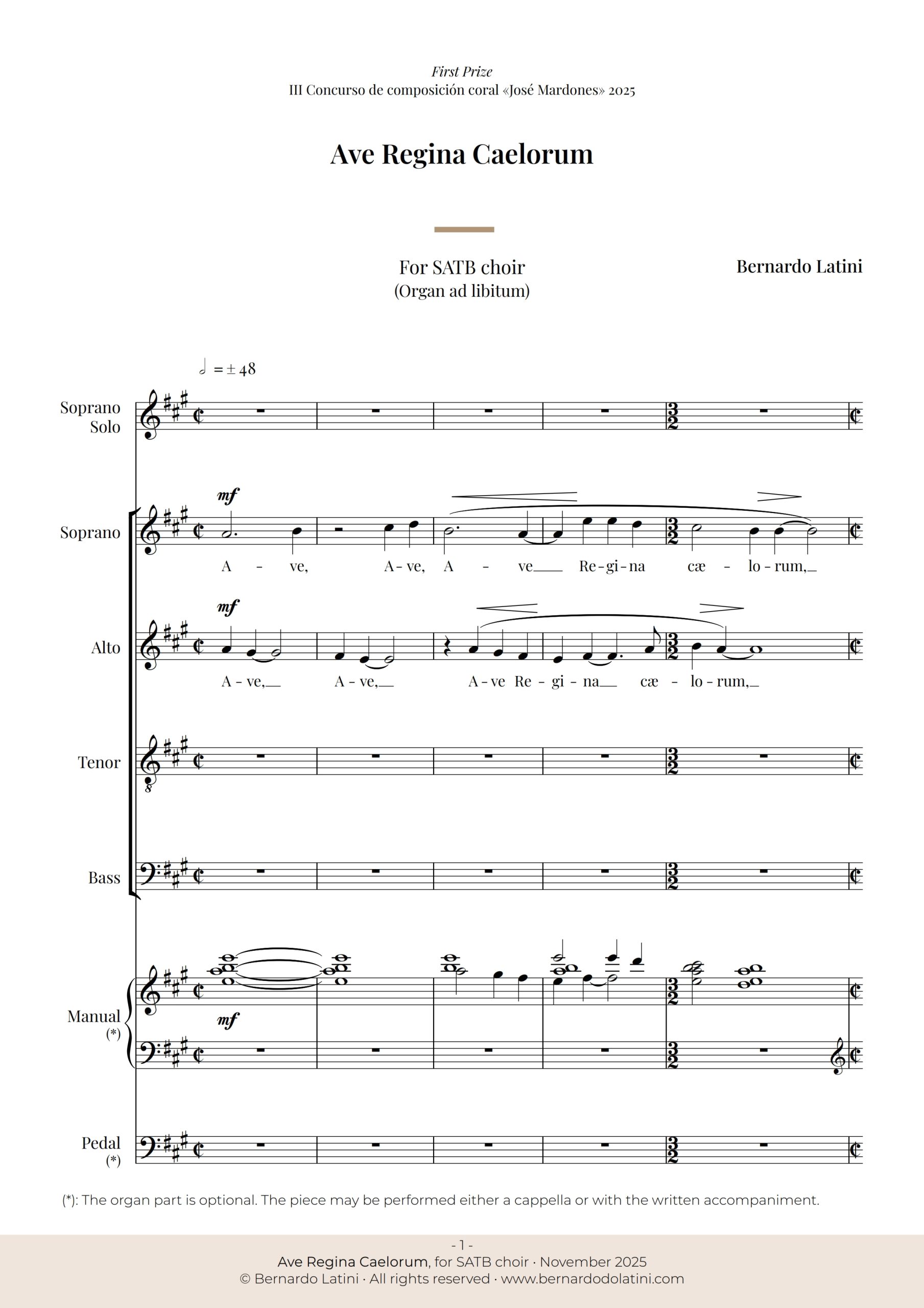
Motet
Bernardo Latini
SATB Choir
(Organ ad libitum)
First Prize III Concurso de composición coral «José Mardones» 2025
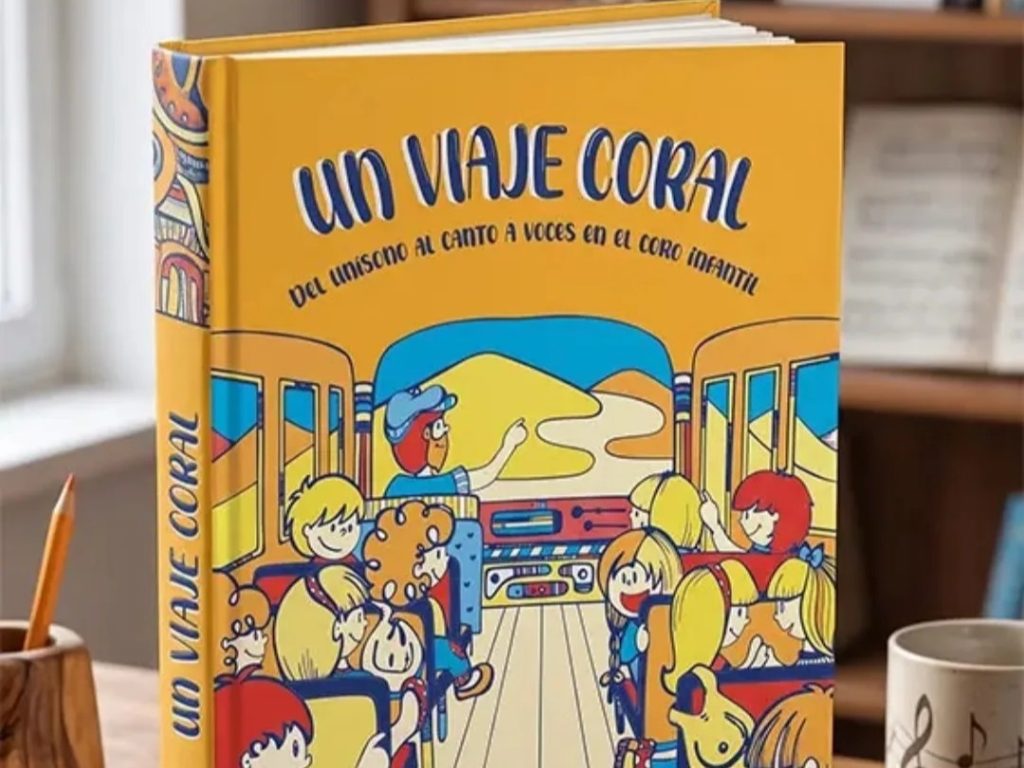
is now available for purchase in digital format on the website of the Asociación Kodály Argentina.
Authors: Mariana Pechuan, Jorge Fuentes, and Bernardo Latini.
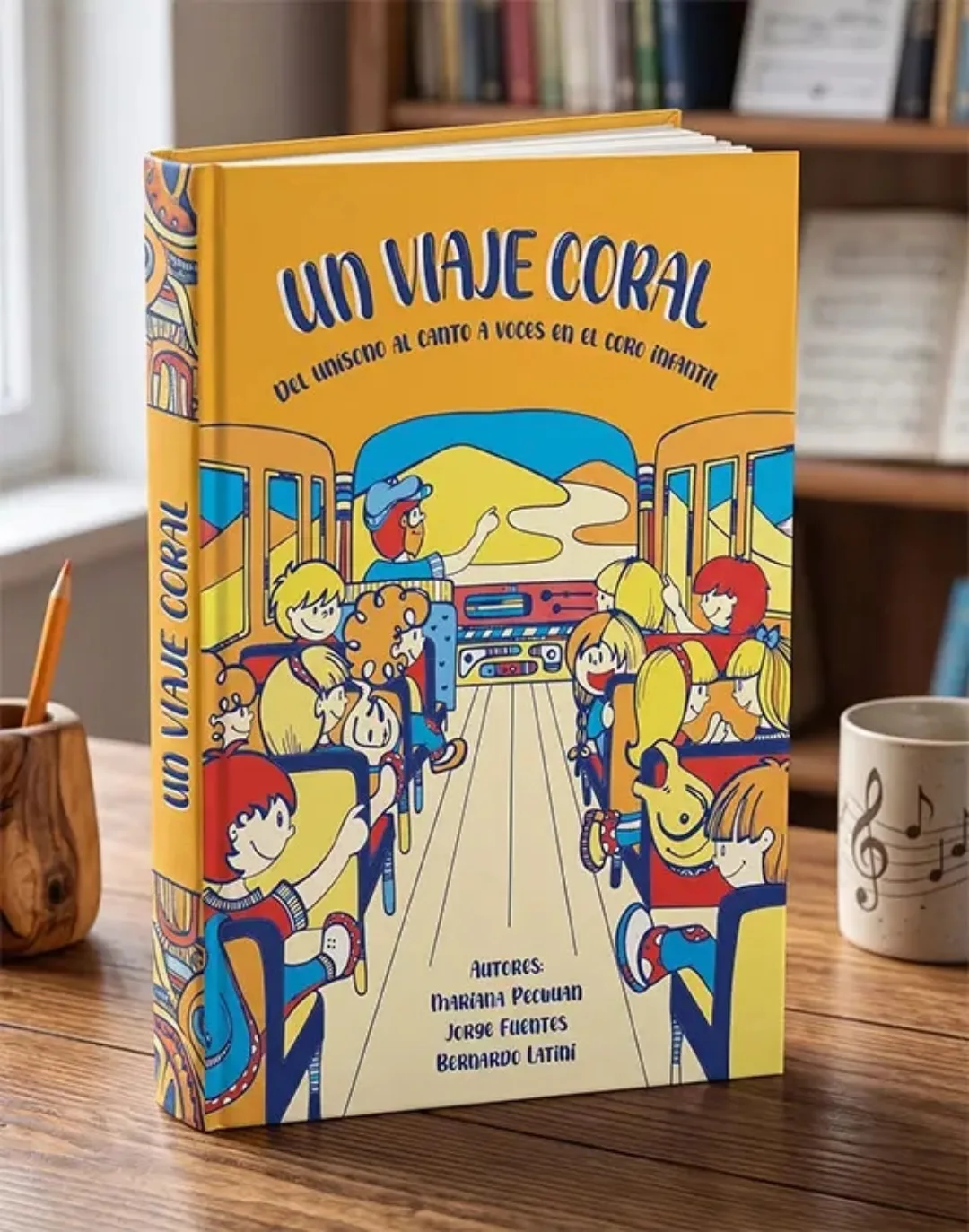
This publication arises from the pressing need to create a pedagogical-musical resource with a playful character that invites sequential learning for children’s choirs. Through a solid theoretical foundation, Mariana Pechuan and Jorge Fuentes lay out an itinerary that guides the director in managing the vocal, aural, and motor challenges inherent to children’s choral activity, taking into account aspects of children’s psychology and emotional development according to their age and vocal range. The work breaks down the necessary processes for choristers to achieve vocal independence, transforming the transition from unison to polyphony into an organic, documented, and deeply human process.
The practical core of this “journey” is materialized in 8 original compositions by Bernardo Latini, created ad hoc on texts by Juan Augusto Laplacette. These pieces, ranging from unison to 4 equal voices a cappella, constitute a sequenced cycle that translates the methodology into real music. As conductor Virginia Bono rightly points out in the prologue, the book is comprehensive because it does not limit itself to explaining the methodological thinking, but rather demonstrates it through a repertoire that allows for the progressive development, understanding, and assimilation of musical competencies.
The illustrations by Sofía Rojas bring to life the path charted by the authors, with a map designed to keep in sight all the regions, stages, and stops that the choral journey allows one to discover.
Mariana Pechuan
Jorge Fuentes
Bernardo Latini
Juan Augusto Laplacette
Sofía Rojas


Available in 3 choral formats:
SATB Choir
SSAA Choir
TTBB Choir
A new series of children choir scores by Bernardo Latini it’s available.
Published by GCC Ediciones, these scores were written for different types of ensembles, from Elementary to Intermediate levels of difficulty, highlighting its playful and pedagogical nature.
The choral arrangements of Sebastián Monk’s pieces deserve a special mention. Humor and everyday scenes related to childhood are interwined, showing an exquisite combination of text and music.
Related released:
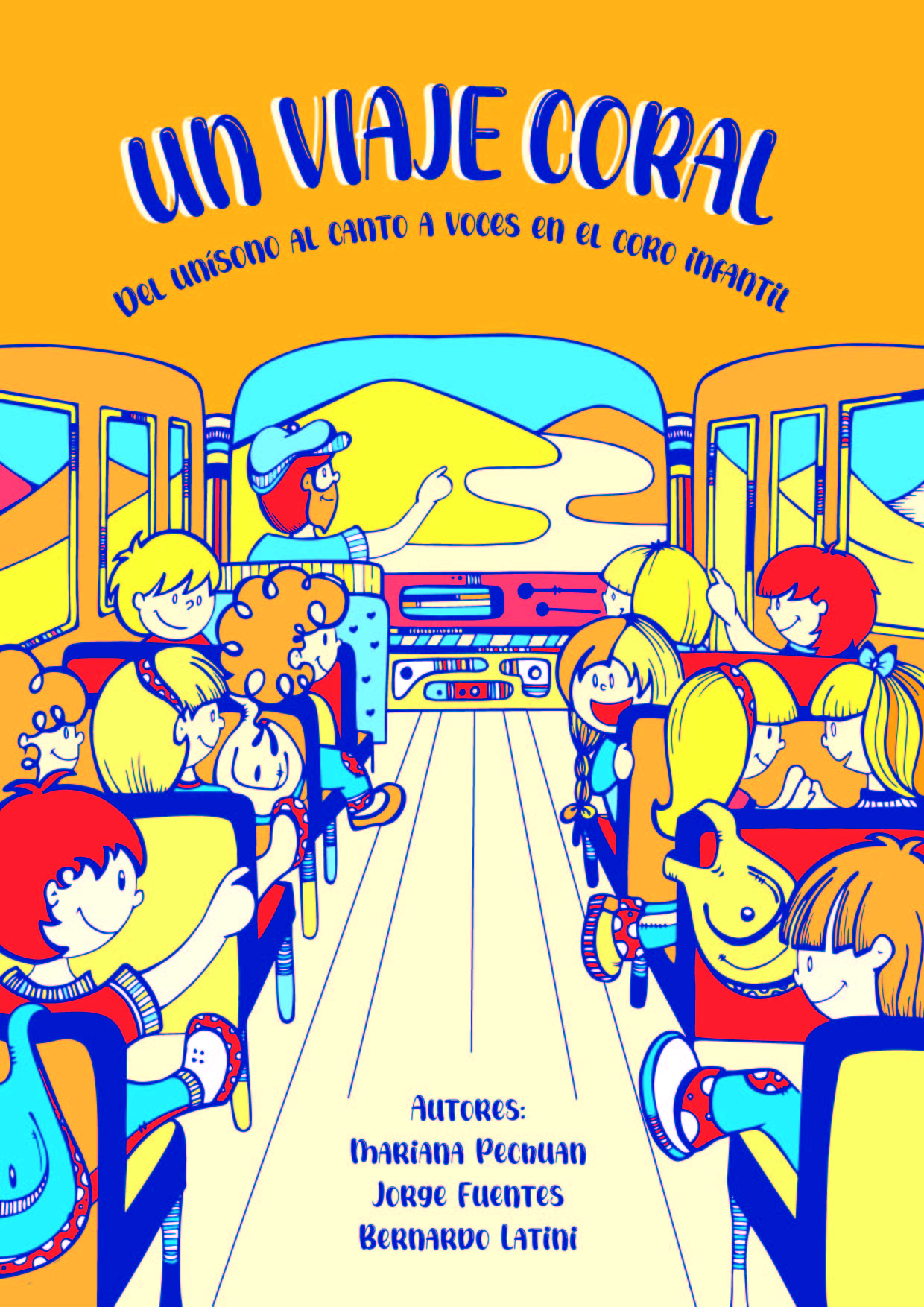
“Un viaje coral.” it’s a book by Mariana Pechuan, Jorge Fuentes and Bernardo Latini, published by GCC ediciones.
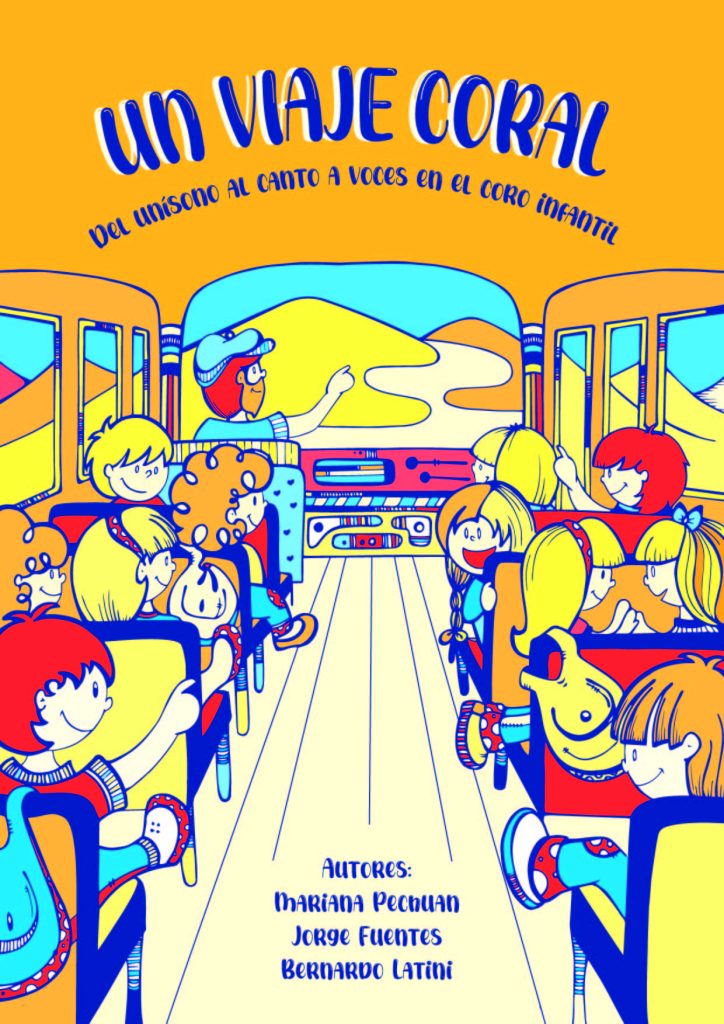
Book by Mariana Pechuan, Jorge Fuentes and Bernardo Latini.
The book includes 8 original compositions for children’s choir, from the unison up to 2, 3 and 4 a cappella equal voices.
Song cycle
Music: Bernardo Latini
Original lyrics: Juan Augusto Laplacette
01- ¡Vamos!
02 – ¿Cuánto falta? – del 1 al 10 –
03 – Una pausa
04 – Sigamos
05 – Un juguete – de la A a la U –
06 – ¡No!
07 – Al volver
08 – Será otra vez
The pieces, composed specifically for this publication, form a cycle of works sequenced from the simplest forms of performance and execution, while also telling a story — a thematic, aesthetic, and technical journey.
The publication includes a map with a traced route: a pedagogical sequence from unison to part‑singing. Additionally, sections are included to guide the choir director in managing the different situations typical of children’s choral activities.
Number of pages: 120
Available in digital format.

“Latinoamérica” Original composition by René Perez Joglar & Eduardo Cabra Martínez.
Arrangement for double mixed choir by Eduardo Ferraudi – Bernardo Latini
Score published by GCC Ediciones. Available here.
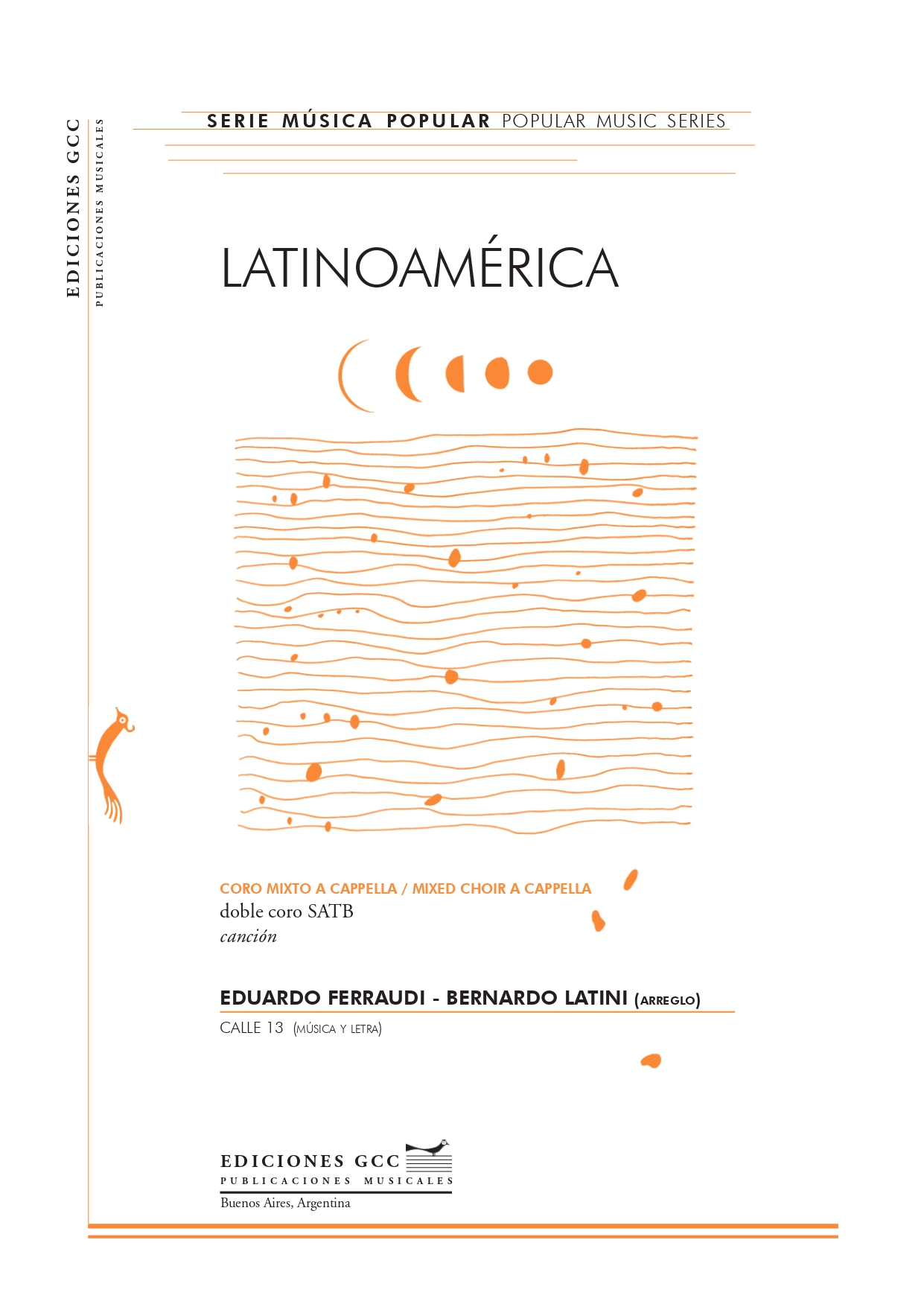
The choral score was written especially for the show “Postales al Sur del Río Bravo (Espejos)”, premiered by Coro Nacional de Jóvenes de Argentina (Argentinian National Youth Choir).
This spectacle was first performed in the Symphonic Concert Hall at Centro Cultural Kirchner, Buenos Aires, in 2019. The show combined Ferraudi and Latini choral arrangements of Latin American music, dance, percussion, and live narration.
Here, the video of the choral version of “Latinoamérica”
Coro Nacional de Jóvenes de Argentina.
Conductor: Pablo Banchi
Guest conductors: Eduardo Ferraudi & Bernardo Latini

“Ritual”, lyrics by Ariel Giacardi and original music by Bernardo Latini, is a composition for mixed choir and kultrúm percussion.
HELBLING PUBLISHING (Innsbruck, Austria) has released the score, available here.
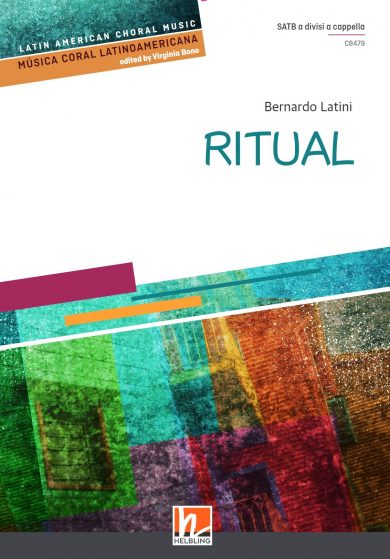
“Ritual” was written by the commission of Estudio Coral Meridies, conducted by Mª Virginia Bono, to be premiered at the 11th World Symposium on Choral Music, Barcelona, 2017.
“Ritual” is a piece based on two texts which are convergent and divergent at the same time and pose realities that are seemingly unrelated in time and space.
The central idea in the first section is that of collective identity, expressed through ancestral ceremony; the invoking of “us”, of the earth, of shared space-time and the drama that arises in the confrontation between the worlds of the good and the bad, of life and death. Everything has a mythical foundation that evokes dimensions that overlap and intertwine.
The second section focuses on the individual and their quest in the big city, in the mid-twenty-first century to make sense of everything in an environment where individuals can feel a lack of sense of community … where solitude, alienation and boredom offer no support.
In both cases, the individual’s search implies a challenge. Towards the end, the hope that shines light on everything represents the opportunity to restore the balance between these two dimensions and ties together both poems.
The music reflects the ambivalences, tensions, juxtapositions and the points in common and of equilibrium.
In the first section, the use of modal harmony and timbres which imitate the sound of the “trompe” (instrument of the Mapuche people, from Argentina and Chile) also allude to an ancestral ceremony. The four terms from the Mapuche language, used at random, almost like a mantra, emphasize the ritualistic character.
In the second section, reminiscence of modern tango, with 3+3+2/8 and 4/4 bars superimposed, and the use of onomatopoeia with tango like articulation insinuate an urban ritual happening in Buenos Aires.
Here, the video of the World Premiere.


